


 En
En  简体中文
简体中文 English
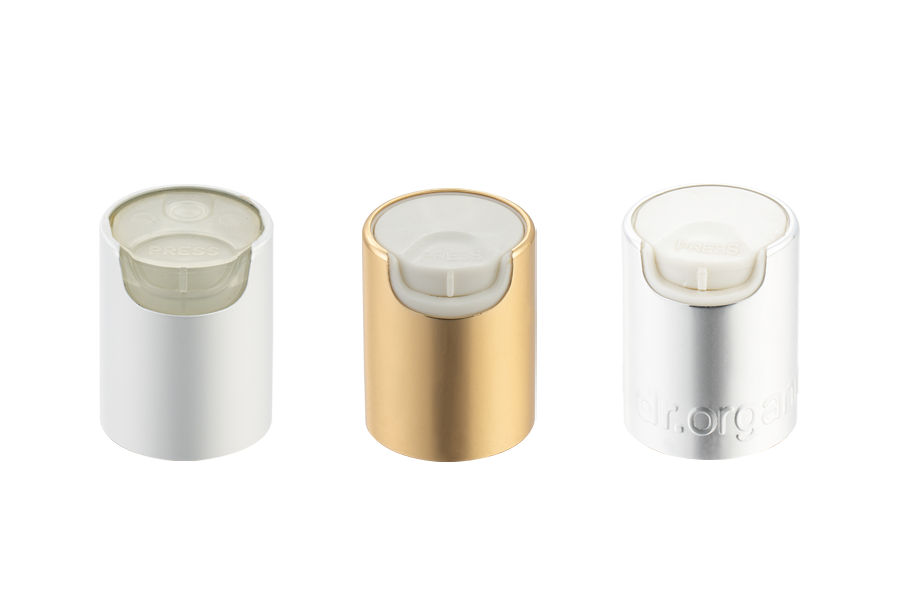
A 24/410 disc top cap is a type of plastic closure designed for bottles and containers with a 24mm neck finish and a 410-style thread pattern. It features a flat, disc-shaped lid with a small, sealable opening at the center — allowing users to dispense product by pressing or flipping the disc open, then resealing it by pressing it shut. These caps are among the most widely used dispensing closures in the personal care, cosmetic, and household product industries.
In short: the "24" refers to the inner diameter of the cap in millimeters, and "410" refers to the thread finish standard — a designation defined by the Glass Packaging Institute (GPI) and widely adopted across the plastics packaging industry.
Content
- 1 Understanding the 24/410 Sizing System
- 2 How Disc Top Caps Work
- 3 Common Materials Used in 24/410 Disc Top Caps
- 4 Industries and Products That Use 24/410 Disc Top Caps
- 5 Key Variations of 24/410 Disc Top Caps
- 6 How to Confirm Compatibility Between a Cap and a Bottle
- 7 Advantages of Using 24/410 Disc Top Caps
- 8 Limitations and Considerations
- 9 Frequently Asked Questions About 24/410 Disc Top Caps
Understanding the 24/410 Sizing System
Bottle cap sizing can be confusing if you're unfamiliar with the standardized coding system. The format "XX/YYY" always follows the same logic:
- First number (24): The inner diameter of the closure in millimeters. This must match the outer diameter of the bottle's neck finish for a proper fit.
- Second number (410): The thread style or finish type. "410" denotes a specific thread profile — the number of turns, pitch angle, and thread depth — that ensures a secure and consistent seal.
The 24/410 finish is one of the most common neck finishes globally, compatible with a broad range of container styles including bottles for shampoo, lotion, dish soap, and hand sanitizer.
| Parameter | Value | Notes |
|---|---|---|
| Inner Diameter | 24 mm | Must match bottle neck finish |
| Thread Finish | 410 | Standard GPI/SPI thread profile |
| Typical Orifice Size | 3 mm – 9 mm | Varies by product viscosity needs |
| Common Materials | PP, HDPE, LDPE | PP most common for its chemical resistance |
| Closure Type | Disc Top (Push-Pull) | Opens and closes with finger pressure |
How Disc Top Caps Work
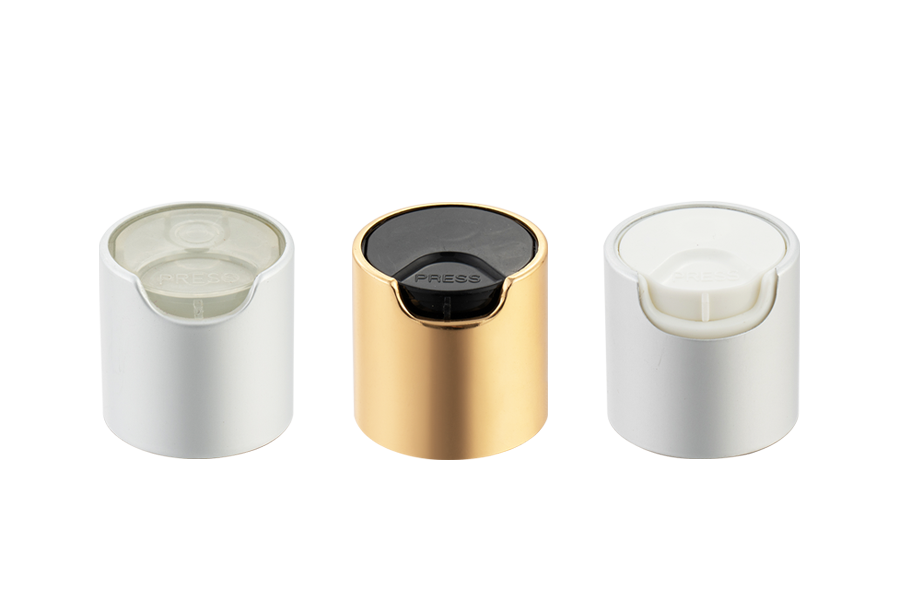
Disc top caps — sometimes called "push-pull caps" — operate through a simple but effective mechanism. The top disc contains a small nozzle or orifice that is sealed when pushed down and open when pulled up. Here's the basic flow of use:
- The user pulls the top disc upward to open the dispensing orifice.
- Squeezing or inverting the bottle dispenses the product through the opening.
- Pushing the disc back down closes the orifice, preventing leaks and contamination.
This design makes disc top caps particularly effective for controlled, mess-free dispensing of liquids and semi-viscous products. Because the opening is sealed when closed, they also provide a degree of tamper-evidence and help preserve product freshness.
Common Materials Used in 24/410 Disc Top Caps
The material selection for a disc top cap directly affects its durability, chemical compatibility, and suitability for different product types. The three most common materials are:
Polypropylene (PP)
PP is the most widely used material for 24/410 disc top caps. It offers excellent chemical resistance, handles a broad temperature range (up to approximately 130°C), and has good structural rigidity. PP caps are suitable for shampoos, conditioners, body washes, and many cleaning products.
High-Density Polyethylene (HDPE)
HDPE caps are known for their stiffness and impact resistance. They are often used in industrial or household chemical applications where robust, cost-effective closures are required.
Low-Density Polyethylene (LDPE)
LDPE is more flexible than PP or HDPE, making it ideal for squeezable bottle applications. Its softer texture allows easier product dispensing when bottles require compression to release product.
Industries and Products That Use 24/410 Disc Top Caps
The 24/410 disc top cap is versatile enough to serve a wide range of industries. Below are the most prevalent application areas:
- Personal Care: Shampoo, conditioner, body wash, facial cleanser, and hand lotion bottles — typically ranging from 100ml to 500ml — commonly use 24/410 disc tops.
- Cosmetics: Liquid foundation, toner, and serum bottles benefit from the precise dispensing control these caps provide.
- Household Cleaning: Dish soap, surface cleaners, and hand sanitizers are commonly packaged with 24/410 disc tops due to the easy single-handed operation.
- Food Service: Condiment dispensers and food-grade squeeze bottles sometimes use this cap style, though food-contact compliance must be verified for the specific resin used.
- Medical and Pharmaceutical: Topical solutions, antiseptic washes, and wound-care liquids may use disc top caps where controlled dispensing is critical.
Key Variations of 24/410 Disc Top Caps
Not all 24/410 disc top caps are identical. Several design variations exist to meet different dispensing and aesthetic requirements:
| Variation | Description | Typical Use |
|---|---|---|
| Standard Disc Top | Flat disc with centered orifice, push-pull operation | Shampoo, body wash |
| Tall Disc Top | Extended height for ergonomic grip | Lotion, hair treatment |
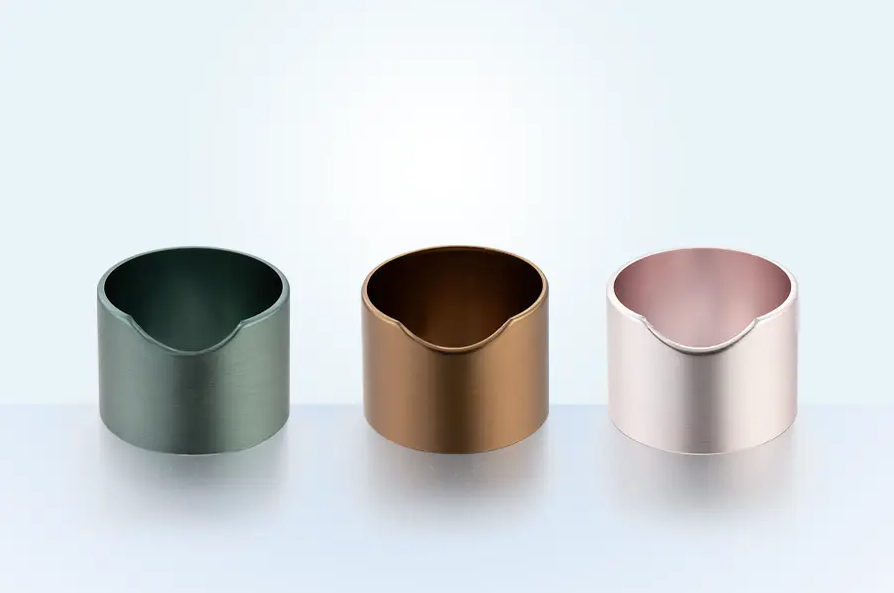
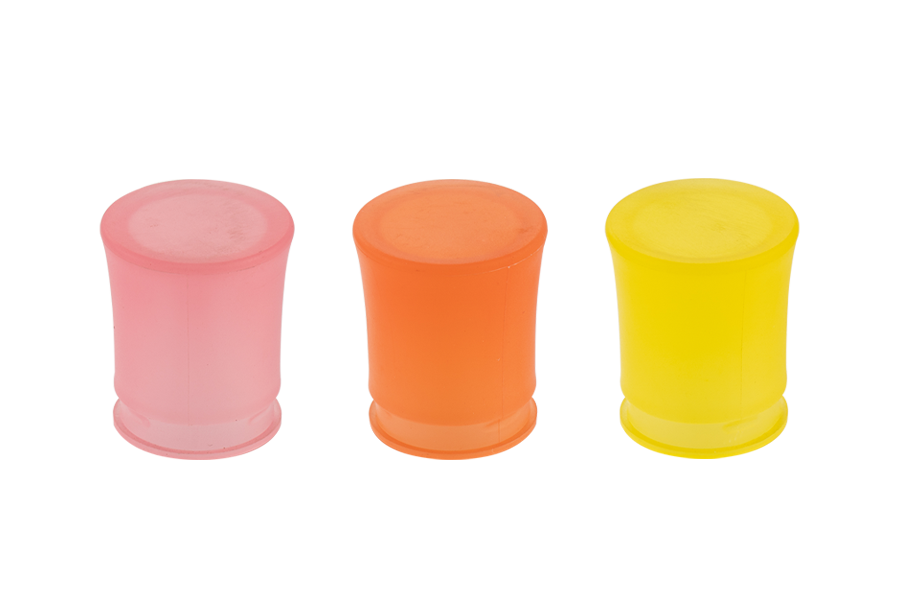
| Colored Disc Top | Custom colors for branding | Premium personal care lines |
| Tamper-Evident Disc Top | Includes a breakaway ring or seal | Pharmaceutical, medical products |
| Small Orifice Disc Top | Reduced opening (3–4 mm) for thin liquids | Toner, serum, essence |
How to Confirm Compatibility Between a Cap and a Bottle
Choosing the right cap goes beyond matching the diameter. Follow these steps to confirm a proper fit:
- Verify the neck finish code: Check the bottle's neck finish designation — it should be labeled 24/410 by the manufacturer or molder.
- Measure the outer diameter of the bottle neck: The outer diameter of a 24/410 finish neck is typically around 27.4 mm. Use calipers for accuracy.
- Confirm the thread engagement: Thread depth and pitch must match. Mismatched 410-style variants (e.g., 24/400 vs. 24/410) will not seal correctly.
- Test with product fill: Always perform a compatibility test with the actual product, especially for high-viscosity or chemically aggressive formulas, before full production runs.
Note that 24/400 and 24/410 are NOT interchangeable — a common source of confusion. The 400 and 410 thread finishes have different thread depths and pitches, and using the wrong cap can result in leaks or cross-threading.
Advantages of Using 24/410 Disc Top Caps
The widespread adoption of 24/410 disc tops is not accidental. They offer a strong combination of functional and commercial benefits:
- Ease of use: Single-handed push-pull operation is intuitive for consumers across all age groups.
- Leak resistance: When properly closed, the disc seal significantly reduces leaks during transport and storage.
- Controlled dispensing: The small orifice limits product flow, reducing waste — especially important for high-cost formulas.
- Wide compatibility: Fits a vast number of standard 24/410 bottle types across multiple materials (PET, HDPE, PP bottles).
- Customization options: Available in numerous colors, orifice sizes, and heights to suit brand identity and product requirements.
- Cost efficiency: High-volume manufacturing keeps per-unit costs low, making them accessible for both large brands and smaller producers.
Limitations and Considerations
Despite their many strengths, 24/410 disc top caps are not suitable for every application. Key limitations include:
- Not airtight: Disc tops do not provide a hermetic seal, making them unsuitable for products requiring oxygen-barrier protection.
- Limited for very thick products: High-viscosity formulations (e.g., dense body butters or heavy creams) may not flow easily through the disc orifice without significant squeezing force.
- Durability under heavy use: The push-pull mechanism can wear out over time, particularly with frequent use in professional or institutional settings.
- Child resistance: Standard disc tops are not child-resistant. Products requiring child-resistant closures (CRC) must use specifically certified closure types.
Frequently Asked Questions About 24/410 Disc Top Caps
Can I use a 24/410 disc top cap on a 24/400 bottle?
No. Although both share a 24mm inner diameter, the 400 and 410 thread profiles are different. Using a mismatched cap risks leaking, cross-threading, or cap failure. Always verify the exact finish code on both the bottle and the cap.
What orifice size should I choose?
Orifice size selection depends on product viscosity. As a general guideline: thin liquids (water-like serums, toners) pair best with 3–5mm orifices, while medium-viscosity products (shampoos, body washes) typically use 6–9mm openings. Testing with actual product fill is always recommended.
Are 24/410 disc top caps recyclable?
PP and HDPE disc top caps are technically recyclable, but local recycling program acceptance varies. Many facilities require caps to be separated from bottles. Increasingly, manufacturers are offering mono-material or recycled-content versions to support sustainability goals.
What is the minimum order quantity (MOQ) for custom disc top caps?
MOQs vary by supplier and customization level. Standard off-the-shelf disc tops often have MOQs as low as 1,000–5,000 units, while fully custom colors or tooling may require MOQs of 10,000 units or more. Working with a packaging distributor can provide access to lower quantities from consolidated stock.




 +86-13967526770 / +86-0575-82393566
 +86-0575-82393568
 Weiqi Road, Hangzhou Bay Economic and Technological Development Zone, Shangyu District, Shaoxing City, Zhejiang Province, China