


 En
En  简体中文
简体中文 English
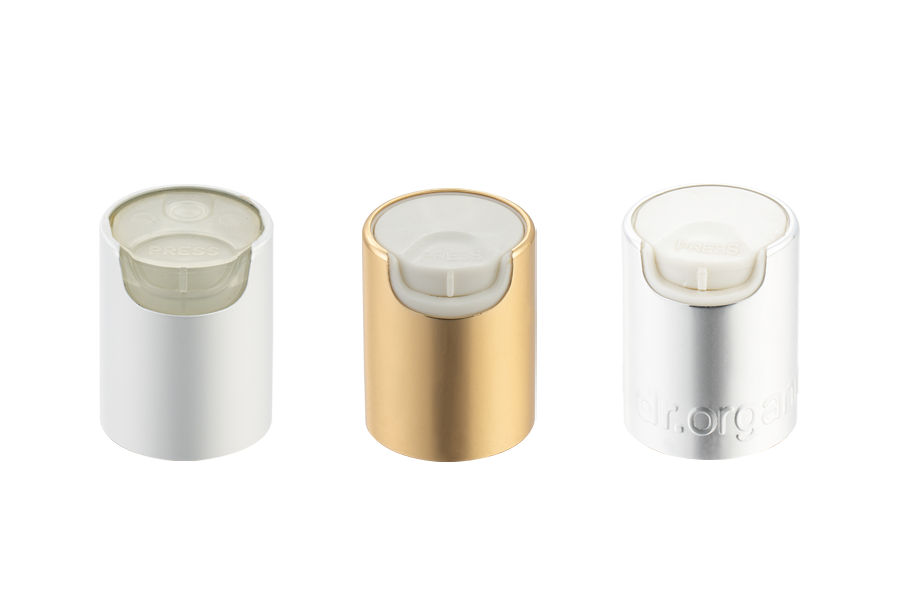
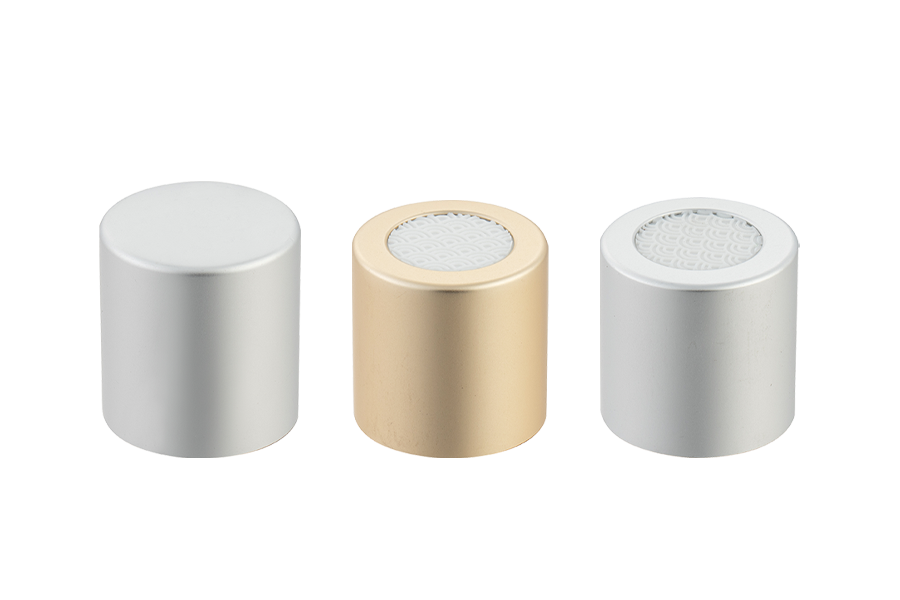
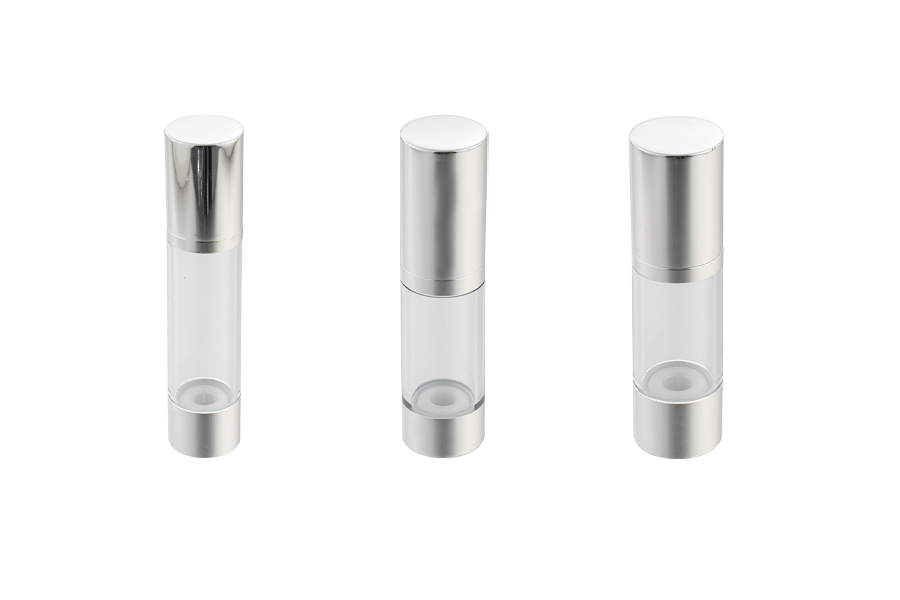
A high-quality aluminum-plastic press cap can be identified by five core criteria: material purity, sealing performance, surface treatment quality, dimensional precision, and customization capability. The aluminum-plastic press cap combines an anodized aluminum outer shell with a molded plastic inner liner, creating a closure that is lightweight, corrosion-resistant, and visually refined—making it the dominant choice for premium cosmetic, pharmaceutical, and personal care packaging. Selecting the right cap requires evaluating each structural and functional layer rather than relying on appearance alone.
The following guide examines each quality dimension in detail, with specific indicators and testing methods to help buyers, product developers, and packaging engineers make confident, informed decisions.
Content
- 1 Understanding the Structure of an Aluminum-Plastic Press Cap
- 2 Evaluating the Aluminum Shell: Grade, Thickness, and Surface Treatment
- 3 Assessing the Plastic Inner Liner: Material, Molding Precision, and Chemical Compatibility
- 4 Sealing Performance: How to Test Before Committing to a Supplier
- 5 Dimensional Accuracy and Compatibility with Bottle Necks
- 6 Comparing Quality Tiers: Key Differences at a Glance
- 7 Customization Options and Their Impact on Brand Value
- 8 Environmental Compliance and Recyclability
- 9 Supplier Qualification: What to Ask Before Placing an Order
Understanding the Structure of an Aluminum-Plastic Press Cap
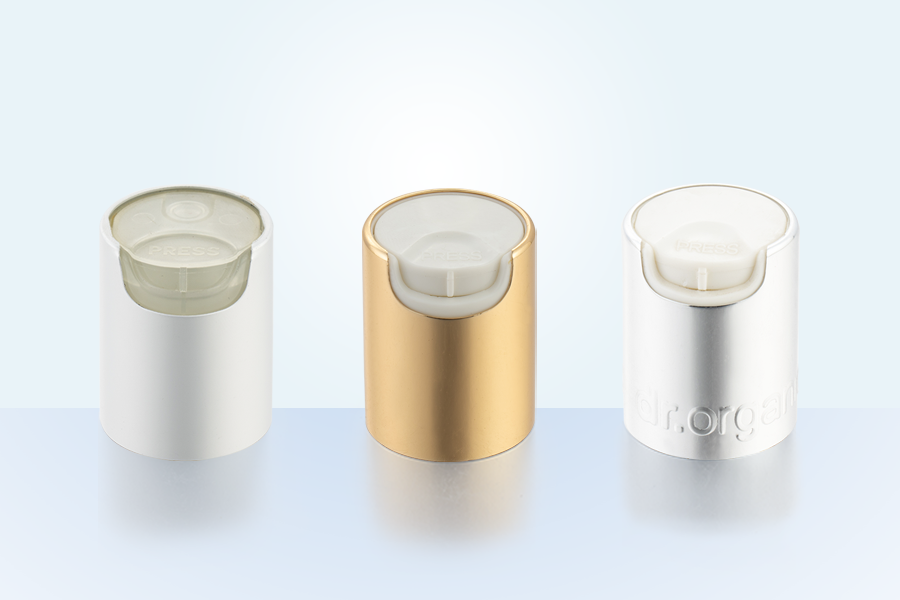
Before evaluating quality, it is important to understand what an aluminum-plastic press cap actually consists of. The cap is a two-component assembly:
- Outer aluminum shell — Stamped or drawn from aluminum sheet, then surface-treated (typically anodized or coated) to achieve the desired color, gloss, and corrosion resistance. The aluminum shell provides structural rigidity, visual appeal, and protection against environmental degradation.
- Inner plastic liner — Injection-molded from polymers such as PP (polypropylene) or PE (polyethylene), the inner liner threads or clips onto the bottle neck and carries the sealing gasket. It is the primary functional component responsible for leak prevention and chemical compatibility with the product.
The two components are assembled by crimping or snapping the aluminum shell over the pre-formed plastic liner. The quality of this assembly—how cleanly the two parts fit and how securely they are joined—is itself a key quality indicator that separates precision-manufactured caps from lower-grade alternatives.
Evaluating the Aluminum Shell: Grade, Thickness, and Surface Treatment
The aluminum shell determines the cap's durability, appearance consistency, and resistance to handling damage. Three sub-factors matter most.
Aluminum Alloy Grade
High-quality aluminum-plastic press caps use food- and cosmetic-grade aluminum alloys, most commonly 1000-series (commercially pure) or 3000-series (aluminum-manganese) alloys. These grades offer the combination of formability during stamping, sufficient strength in the finished cap, and compatibility with anodizing and coating processes. Caps made from recycled or unspecified aluminum scrap frequently show inconsistent thickness, surface pitting, and variable color uptake during anodizing—all visible as quality defects in the finished product.
Wall Thickness Consistency
The aluminum wall thickness of press caps for cosmetic applications typically ranges from 0.2 mm to 0.5 mm depending on cap diameter and intended use. More important than the nominal thickness value is consistency: thickness variation across the cap body should be within ±0.02 mm in precision-manufactured caps. Uneven wall thickness causes visible deformation when the cap is pressed onto the bottle, and creates weak points susceptible to denting during transport and retail handling. Check by pressing the side of the cap gently between thumb and forefinger—premium caps resist deformation; thin or inconsistent caps dent under moderate finger pressure.
Anodizing and Surface Coating Quality
The aluminum surface is treated to prevent oxidation, anchor colorants, and create a smooth, visually uniform finish. Anodizing—an electrochemical process that thickens the natural aluminum oxide layer—is the industry standard for cosmetic packaging caps. A properly anodized layer for cosmetic applications is typically 10 to 25 microns thick, providing meaningful corrosion resistance while accepting dyes evenly for consistent coloration.
Signs of inadequate surface treatment include:
- Uneven color saturation or streaking when caps are viewed in consistent lighting
- Color that rubs off onto a white cloth under light friction—indicating a coating applied over bare aluminum without anodizing
- Visible pitting or surface roughness under magnification, indicating poor aluminum quality or inadequate pre-treatment before anodizing
- White powdery residue appearing on the surface after salt spray testing—a standard accelerated corrosion test for packaging components
Assessing the Plastic Inner Liner: Material, Molding Precision, and Chemical Compatibility
The inner liner is the functional heart of the press cap. Its quality directly determines sealing performance, chemical resistance, and long-term reliability.
Polymer Material Selection
Polypropylene (PP) is the most widely used material for aluminum-plastic press cap liners, offering good chemical resistance, dimensional stability, and compatibility with cosmetic ingredients including alcohols, emulsifiers, and mild acids. For products containing strong solvents or aggressive active ingredients, HDPE (high-density polyethylene) liners provide superior chemical resistance. The liner material should be disclosed by the supplier and should comply with relevant food-contact or cosmetic packaging regulations in the target market (such as EU Regulation No. 10/2011 for plastics in contact with food and personal care products).
Molding Precision and Thread Quality
The liner's internal thread or snap-fit geometry must match the bottle neck finish with precision. Thread tolerances for standard cosmetic cap finishes (such as GPI 400-series) are specified in tenths of a millimeter. Poorly molded liners show visible flash (excess plastic at parting lines), sink marks, or thread distortion—all indicators of inadequate injection pressure, mold wear, or insufficient cooling time during production. These defects translate directly into inconsistent opening torque and potential sealing failure in use.
Sealing Gasket or Liner Insert
High-quality press caps include a separate sealing gasket—typically PE foam, EPE, or PE liner insert—fitted into the cap's top inner surface. This gasket conforms to the bottle's lip under closing pressure, creating a hermetic seal that prevents product leakage and evaporation. Caps without a dedicated gasket rely entirely on plastic-to-glass or plastic-to-plastic contact for sealing, which provides significantly lower sealing consistency and is inappropriate for volatile or liquid-phase cosmetic products.
Sealing Performance: How to Test Before Committing to a Supplier
Sealing performance is the most critical functional requirement for any press cap used in liquid or semi-liquid cosmetic packaging. Inadequate sealing causes product leakage, evaporation of active ingredients, contamination risk, and consumer returns. Practical pre-qualification tests include:
- Inversion leak test — Fill the bottle with water or the actual product, apply the cap at the recommended torque, invert for 24 hours, and inspect for leakage or moisture at the cap-bottle interface. No visible leakage is the pass criterion for well-sealed caps.
- Vacuum leak test — Place capped, filled bottles in a vacuum chamber at reduced pressure (typically 27 kPa below atmospheric) for a defined period. Any air infiltration or product migration indicates insufficient sealing.
- Drop test — Drop capped bottles from a height of 1.0 to 1.2 meters onto a hard surface from multiple orientations. The cap should remain sealed and show no structural failure or detachment from the bottle.
- Thermal cycling test — Subject capped bottles to repeated temperature cycles (typically 5°C to 45°C, 10 cycles) to simulate storage and shipping conditions. Seals that fail under thermal stress will produce leakage or cap loosening after cycling.
Request that suppliers provide test reports for at least the inversion and drop tests as part of routine qualification. Suppliers unable to provide documented test results should be considered unqualified for cosmetic packaging applications where product integrity is a regulatory and commercial requirement.
Dimensional Accuracy and Compatibility with Bottle Necks
An aluminum-plastic press cap that does not fit the bottle neck accurately is functionally useless regardless of its other quality attributes. Dimensional compatibility is defined by three measurements:
- Cap inner diameter (T dimension) — Must match the outer diameter of the bottle neck finish within specified tolerance, typically ±0.2 mm for press-fit caps
- Thread engagement depth (E dimension) — For threaded press caps, the length of thread engagement must be sufficient to develop full clamping force without cross-threading or stripping under normal opening torque
- Cap height (H dimension) — Affects the visual proportion of the finished package and must be consistent across production batches to maintain line appearance on retail shelves
Request dimensional reports (inspection certificates) from suppliers showing measured values against specified tolerances for each production batch. Reputable manufacturers use coordinate measuring machines (CMM) or optical measurement systems for plastic liner dimensions, and physical gauges for aluminum shell dimensions, with documented sampling plans that comply with AQL (Acceptable Quality Level) standards.
Comparing Quality Tiers: Key Differences at a Glance
The market for aluminum-plastic press caps spans a wide range from economy-grade commodity caps to precision-manufactured premium components. The table below summarizes the distinguishing characteristics across three quality tiers:
| Quality Indicator | Economy Grade | Mid Grade | Premium Grade |
|---|---|---|---|
| Aluminum alloy | Unspecified / recycled | 1000-series specified | 1000 or 3000-series, certified |
| Wall thickness tolerance | ±0.1 mm or greater | ±0.05 mm | ±0.02 mm |
| Anodizing layer thickness | Less than 5 microns or paint only | 8–12 microns | 15–25 microns |
| Inner liner material | Unspecified polymer | PP, grade disclosed | PP or HDPE, food/cosmetic grade certified |
| Sealing gasket | None or inconsistent | Basic PE liner | EPE or PE foam gasket, precisely fitted |
| Dimensional documentation | Not provided | Basic inspection sheet | Full CMM report, AQL-based sampling |
| Customization capability | Standard colors only | Color selection, basic embossing | Full color matching, logo engraving, special finishes |
Customization Options and Their Impact on Brand Value
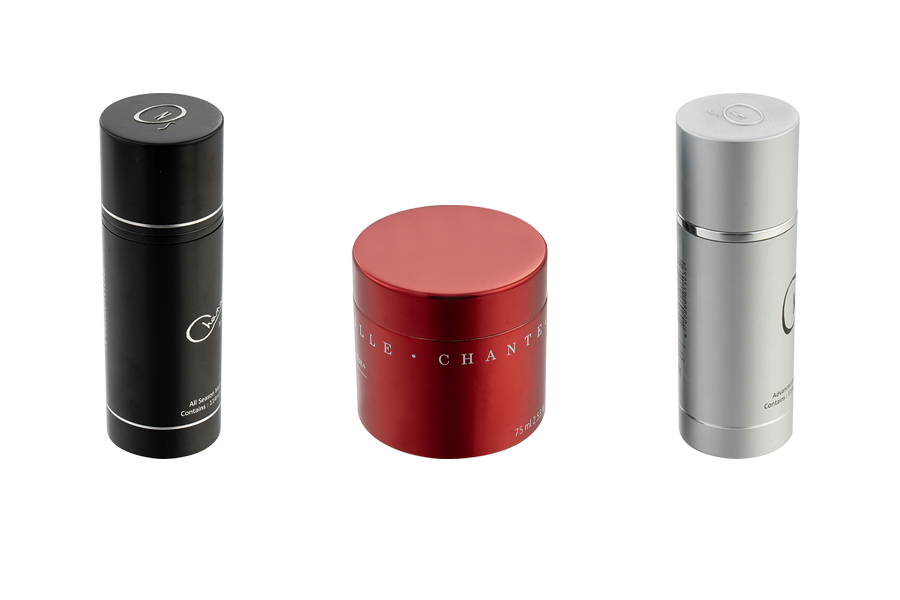
For cosmetic brands, the press cap is a visible brand touchpoint. High-quality manufacturers offer a range of customization options that, when executed well, significantly elevate the perceived quality and shelf differentiation of the packaged product.
Color and Finish Options
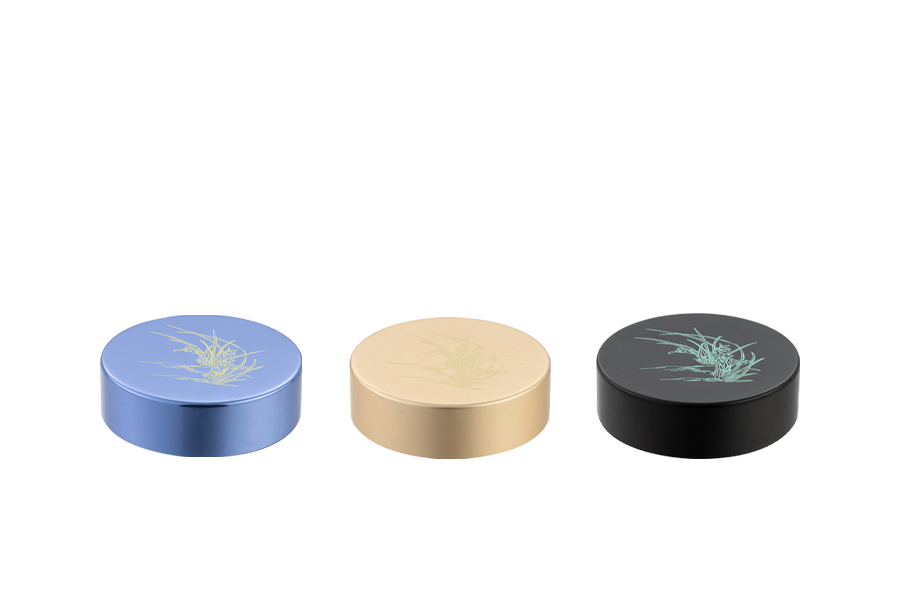
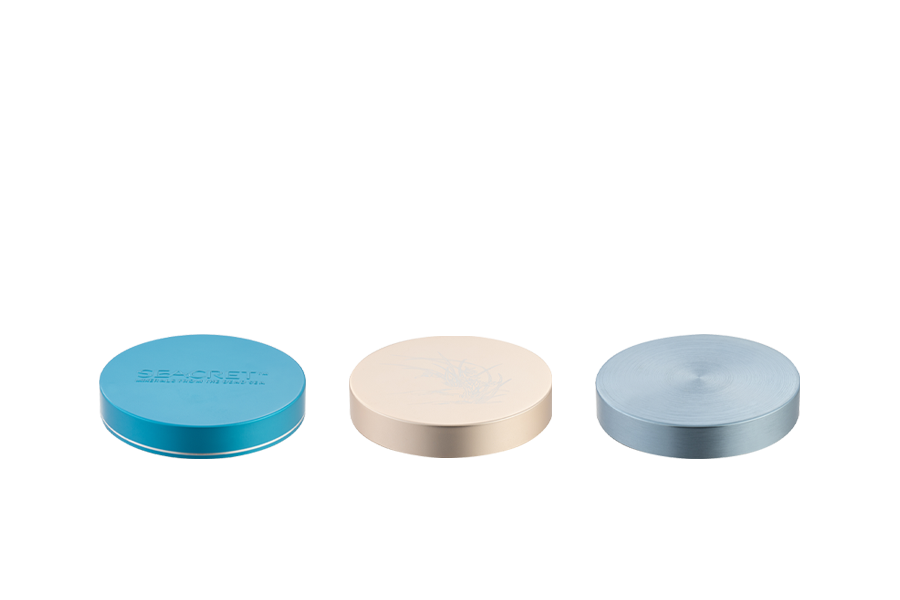
Anodized aluminum accepts dyes in a wide color gamut. Quality manufacturers can match colors to Pantone or RAL references with a color tolerance of Delta-E less than 1.5—effectively invisible to the naked eye. Available finishes include matte, satin, gloss, brushed (hairline), and mirror-polished, each achievable through different post-anodizing or mechanical treatment processes. Matte and satin finishes are currently dominant in premium skincare packaging for their tactile quality and resistance to showing fingerprints.
Logo and Text Application
Brand logos and text can be applied to aluminum-plastic press caps through several methods, each with different quality and durability profiles:
- Laser engraving — The most durable option; removes surface anodizing to expose bright aluminum beneath, creating a permanent contrast mark that cannot be rubbed off. Best for high-end brands where longevity and premium feel are priorities.
- Embossing / debossing — Mechanical stamping of the aluminum shell creates raised or recessed logos that are tactile and permanent. Requires dedicated tooling per design, making it cost-effective only for larger production volumes (typically 10,000 units or more per design).
- Hot stamping / foil stamping — Transfers a metallic or pigmented foil onto the cap surface under heat and pressure. Produces high-gloss, visually striking results but has lower abrasion resistance than engraving or embossing.
- UV printing — Directly prints full-color graphics onto the cap surface. Offers maximum design flexibility for small batches or complex artwork but requires careful evaluation of ink adhesion and abrasion resistance on aluminum substrates.
Special Surface Effects
Premium suppliers offer specialty surface effects including gradient color transitions (achieved through selective anodizing masking), pearl or metallic sheens (via specialized pigment addition to the anodizing bath), and dual-tone finishes combining brushed and polished zones on the same cap. These effects significantly increase unit cost but can deliver a packaging aesthetic that is difficult for competitors to replicate without the same tooling and process capability.
Environmental Compliance and Recyclability
Sustainability considerations are increasingly important in packaging specification decisions, both for regulatory compliance and consumer brand alignment. Aluminum-plastic press caps have a mixed recyclability profile that depends on whether the two components can be separated at end of life.
Aluminum is one of the most recyclable materials available—recycling aluminum requires only 5% of the energy needed to produce primary aluminum from ore, and recycled aluminum retains full material properties indefinitely. However, when the aluminum shell and plastic liner are bonded inseparably, mixed-material recycling streams are required, which are less efficient than single-material streams.
When specifying aluminum-plastic press caps for sustainability-conscious applications, evaluate the following:
- Separability — Caps where the aluminum shell can be manually separated from the plastic liner by the end consumer enable separate recycling of both components. This is a meaningful design improvement worth specifying.
- Recycled aluminum content — Some manufacturers offer caps produced from post-consumer recycled aluminum sheet. Request the percentage of recycled content and supporting documentation.
- Absence of restricted substances — Ensure the cap complies with REACH (EU) or equivalent regulations regarding restricted substances in packaging materials, particularly relevant for dyes used in anodizing and plasticizers in the liner.
- Supplier environmental certification — ISO 14001 environmental management certification for the manufacturing facility is a baseline indicator that environmental impacts are systematically managed.
Supplier Qualification: What to Ask Before Placing an Order
Identifying a quality aluminum-plastic press cap on paper is only the first step. Supplier capability and quality systems determine whether that quality is consistently delivered across production batches. Before committing to a supplier, verify the following:
- Request physical samples — Evaluate finish consistency, dimensional fit on your specific bottle, sealing performance, and assembly quality across a sample set of at least 20 to 30 pieces. Inconsistency within a small sample predicts larger batch variation.
- Review quality certifications — ISO 9001 quality management certification is a minimum standard. For cosmetic packaging, check whether the supplier holds additional certifications relevant to your target market (such as SGS compliance testing reports for heavy metals in surface coatings).
- Clarify minimum order quantities (MOQ) — Standard MOQs for custom-color or custom-logo aluminum-plastic press caps typically range from 5,000 to 20,000 pieces per SKU. Suppliers offering no-MOQ custom production should be scrutinized carefully, as very small custom batches are frequently produced using lower-precision processes.
- Confirm raw material traceability — Ask for material certificates (mill certificates for aluminum, material safety data sheets for plastic resins) that trace the raw materials used in your specific production run back to their source.
- Establish incoming inspection protocols — Even with a qualified supplier, implement incoming quality control on the first several shipments, checking critical dimensions, color, and sealing performance against agreed acceptance criteria before the caps enter your filling line.




 +86-13967526770 / +86-0575-82393566
 +86-0575-82393568
 Weiqi Road, Hangzhou Bay Economic and Technological Development Zone, Shangyu District, Shaoxing City, Zhejiang Province, China