


 En
En  简体中文
简体中文 English
In today's pursuit of ultimate freshness and environmental protection, Tea Aluminum Can have become a new favorite in the high-end tea market. While consumers enjoy the convenience and efficient moisture protection offered by aluminum canisters, a core product knowledge question arises: what materials are typically used for the inner coating of Tea Aluminum Can? This invisible "protective film" is key to ensuring the purity of tea flavor and preventing metal contamination.
Content
Why is an inner coating necessary?
First, we must clarify why aluminum canisters need a coating. While aluminum itself is lightweight and highly recyclable, it is chemically reactive. Tea contains various organic acids and tannins. If tea comes into direct contact with aluminum, a minor chemical reaction may occur, leading to:
Flavor Changes: A metallic taste may develop, affecting the tea's flavor and aroma.
Corrosion Risk: Long-term storage may cause corrosion of the inner wall of the aluminum canister, affecting its freshness preservation effect.
Health Concerns: The leaching of trace amounts of aluminum ions raises consumer concerns about health and safety.
Therefore, the inner coating acts as a barrier between the tea and the metal can.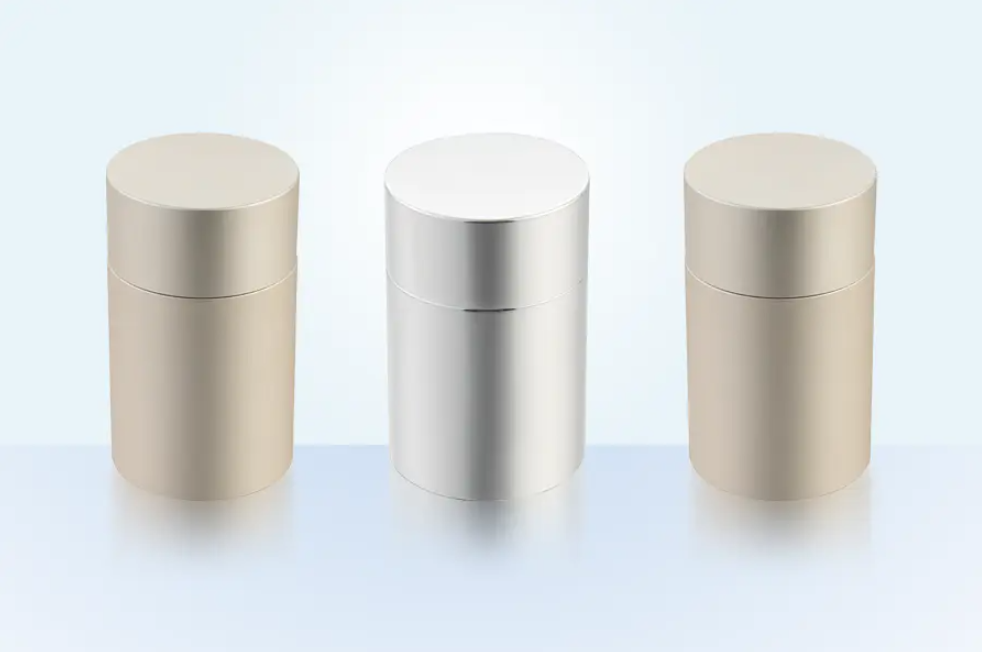
Core Answer: Mainstream Coating Material Choices
Currently, the mainstream materials for the inner coating of aluminum tea cans on the market are mainly concentrated in the following categories:
1. Epoxy Resins
This is the most common and widely used coating system.
Features: Excellent adhesion, flexibility, and resistance to acidic substances. It effectively isolates the aluminum material, making it the first choice to ensure the stable quality of tea during long-term storage.
In recent years, due to concerns about the potential health risks of bisphenol A (BPA) (although it is safe under current standards), many high-end Tea Aluminum Can manufacturers are actively shifting towards developing "BPA-free (BPA-NI)" environmentally friendly alternative coatings to meet the needs of health-conscious consumers.
2. Polyester Resins
As an alternative to epoxy resins, polyester coatings are also increasingly used.
Features: Better environmental performance, and good flexibility and processing adaptability. While ensuring effective insulation, it also meets the physical requirements of the aluminum can during the stamping process.
Nitrogen Filling: A Powerful Companion for Preservation
The inner wall coating is only one part of the tea preservation system. A high-quality Tea Aluminum Can must also be combined with advanced nitrogen-filling preservation technology.
Nitrogen Filling: Before sealing, nitrogen is filled into the aluminum can to expel oxygen from the can. This fundamentally prevents oxidation and spoilage of the tea, maximizing the preservation effect.
Synergistic Effect of Inner Wall Coating and Nitrogen Filling: The coating provides chemical insulation, while nitrogen filling technology provides physical insulation, together constructing a "preservation vault" for the tea.
Future Outlook: Recyclability and Bio-based Coatings
With the global emphasis on sustainable development, future trends in the development of inner wall coatings for tea aluminum cans will focus on:
Improved Recyclability: Developing coatings that are easier to separate from the aluminum material and do not affect the recycling quality of the aluminum can.
Bio-based Coatings: Using plant-derived, biodegradable bio-based materials to further reduce the environmental footprint.
The next time you pick up a tea canister, remember that the thin inner coating is a solid guarantee provided by modern food technology for your health and safety and the ultimate flavor of your tea.



 +86-13967526770 / +86-0575-82393566
 +86-0575-82393568
 Weiqi Road, Hangzhou Bay Economic and Technological Development Zone, Shangyu District, Shaoxing City, Zhejiang Province, China